


Western Ghats · April 2024 · By SUYANA
Agumbe Without the Rain: Waterfalls, River Baths, and the Quiet Magic of Summer
Everyone knows Agumbe for the monsoon. The dramatic rainfall, the green-soaked forests, the mist rolling in from the Arabian Sea — these images dominate every travel article about this village. But Agumbe in summer is its own kind of magic, and it is one that far fewer people have experienced.
Visit between March and June and you find a different forest: sunlit, quieter, with the confident beauty of a place that doesn't need drama to impress. The canopy is denser, the light comes through in long golden shafts, and the waterfalls — fed by the previous year's monsoon stored in the hillside — are still flowing. Most importantly, the trails are dry enough to walk without becoming an obstacle course.
Kudlu Teertha: The Waterfall Worth the Walk
The centrepiece of the summer experience is the trek to Kudlu Teertha waterfall — a forest trail that follows a river upstream to a cascade set in a natural rock amphitheatre. The walk takes about two hours through shaded forest, past pools of clear water and the occasional rustle in the undergrowth that could be a monitor lizard, a porcupine, or a Malabar giant squirrel. The waterfall itself is powerful even in summer, and the pool at its base is deep enough to swim in safely under supervision.
River Bathing in the Tunga
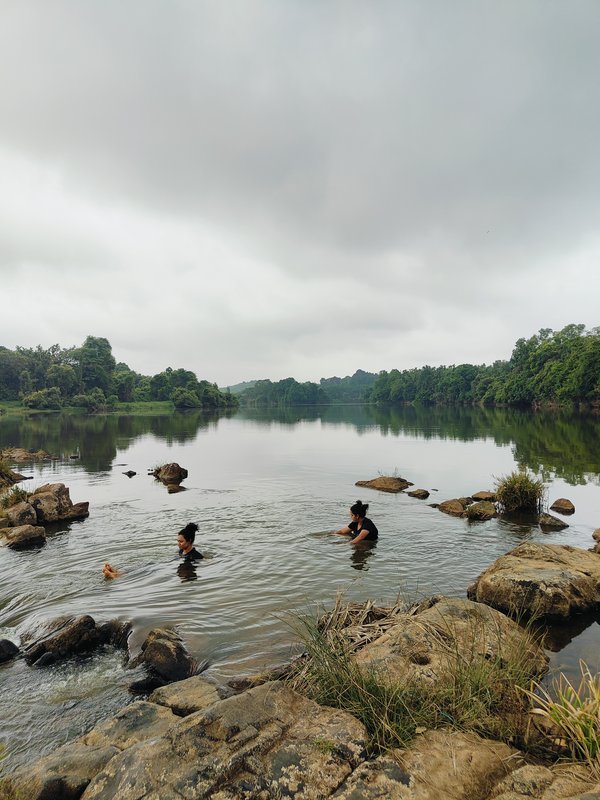
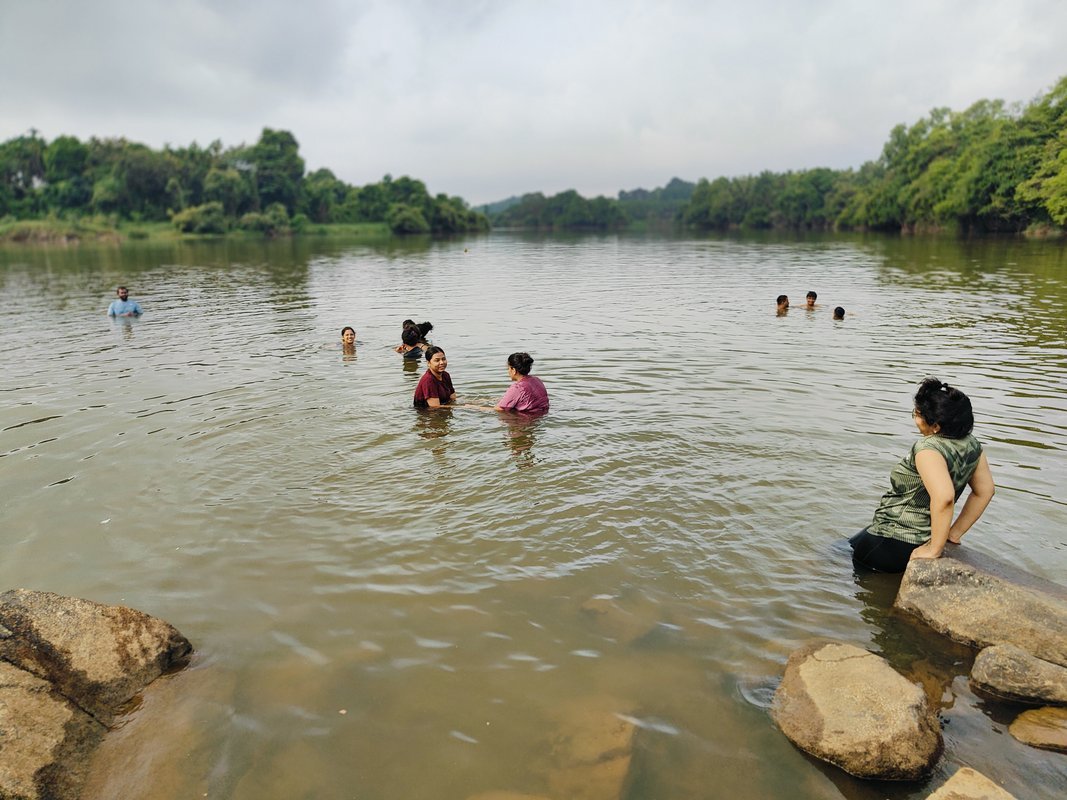
The Tunga river originates near Agumbe — one of two rivers that join at Shivamogga to form the Tungabhadra, which eventually feeds the Krishna river basin. In summer, the Tunga at its origin points is knee-deep, crystal clear, and absolutely cold. SUYANA's itinerary includes supervised river bathing at a safe and shallow section — one of those rare travel experiences that adults describe, embarrassed by how much joy it brought them, as feeling like being a child again.
Sringeri: The Living Temple Town
An hour from Agumbe is Sringeri — home to the Sharada Peetham, one of the four cardinal monasteries established by Adi Shankaracharya in the 8th century. The Sharadamba temple here is built over the Tunga river, and the deity faces the river directly. This is not a tourist destination in the conventional sense. It is a working spiritual centre with thousands of daily visitors from across India, many of whom have been coming for generations. Spending an hour here, especially during the morning puja, gives you a window into a living religious tradition that has been unbroken for over twelve centuries.
The Malenadu Table
Summer in Agumbe means jackfruit season. The Malenadu kitchen in June revolves around young jackfruit — cooked as a curry, dried as a snack, or served raw with coconut. Alongside this, you eat local red rice (ukda), fish from the nearby streams, wild greens foraged from the forest edge, and the most intensely flavoured coconut chutney you will ever encounter. The meals at the homestay are as much a part of the experience as the trekking. Plan to eat too much.
- Best season: March to June for summer experience. April–May is peak season with the most comfortable weather.
- Waterfall status: Still strong in April and May. Reduced but still flowing in June as the pre-monsoon heat intensifies.
- Wildlife: Better chance of spotting birds and reptiles in summer — they are more active in the dry warmth. King Cobra sightings are possible year-round but especially after rains.
Experience Agumbe Summer with SUYANA
Waterfalls, river bathing, Sringeri temple, and Malenadu homestay — all in one weekend.
View the Agumbe Summer Trip Curated Journeys